I recently acquired Dominique Cardon’s workbook “Antoine Janot’s colours” and noted how important the use of gallnuts is in most of his recipes, associated with madder or logwood. oak galls seem the key to tempering colour to obtain deeper blacks and also complex yellows, fauves and rich reds.
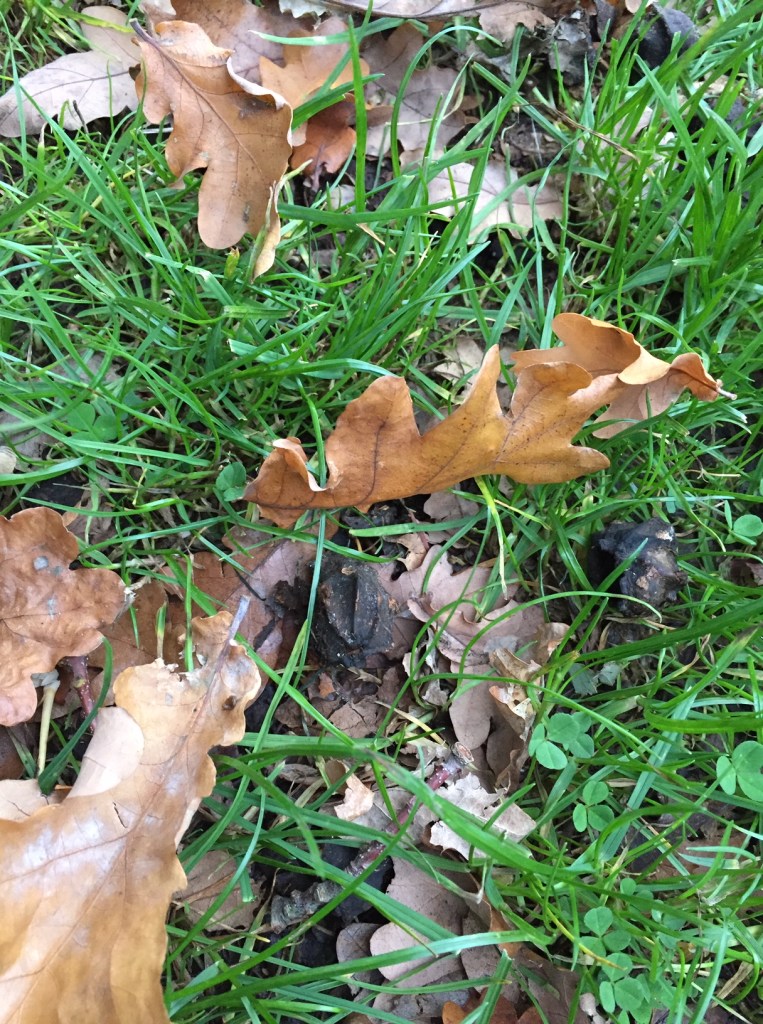
Living near beautiful Greenwich Park with its numerous historic tudor oaks, it seemed timely to go oakgall gathering before they all start to decompose and breakdown into the soil over winter. Recent autumnal winds have brought a shower of windfall acorns and galls and we are lucky in London to have access to so many of natures gifts to artisan dyers.
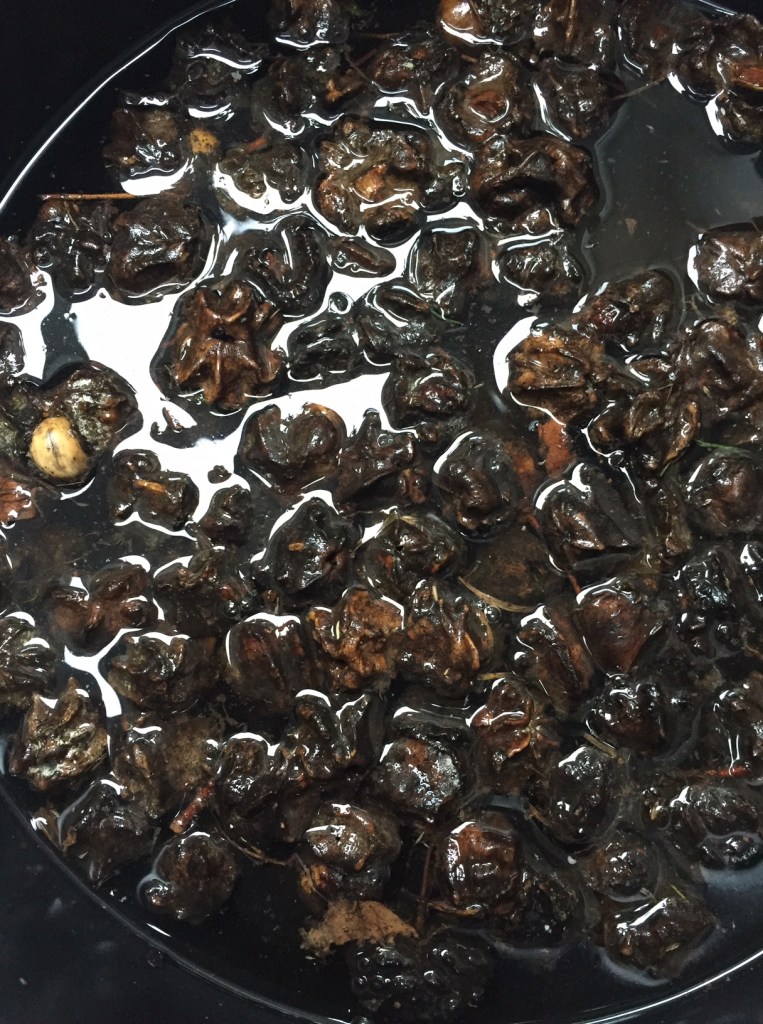
On silk the resulting colour was a rich, shining antique golden brown, full of sunshine. Overdyed on logwood this built a complex deep brown very suited to silk and complementing many skin tones. Accessible to any English dyer, one can understand why this was such a key ingredient for 18th century dyers as the beautiful oak tree was readily providing galls around the country, free for all to harvest. I cannot understand why more artisans today are not dyeing with oak, which is free, as opposed to the trendy avocado. I picked enough to also make a steam bundle for an essentially english eco-print: oak leaves wrapped and steamed over oakgalls. The sunny flavonoids produce an abstract leaf imprint easily distinguishable as the iconic oak.
I would encourage all dyers to go and collect the spiky gallnuts and stock up for the winter as the rich dye liquor produces such a fundamental building block to many colours in the western dye repertoire. And a few hours out walking amidst the great oaks rekindles the spirit…
 Sustainable Fashion Strategies